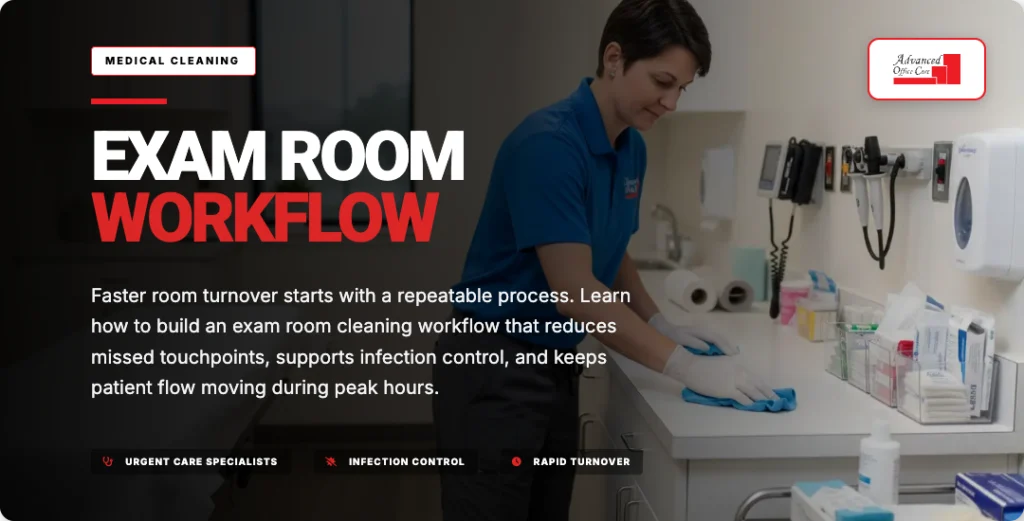
Quick Answer: A strong exam room cleaning workflow for urgent care should follow a repeatable sequence: clear used materials, clean and disinfect high-touch surfaces, reset the patient zone, restock key supplies, and verify the room is ready before the next patient enters. In a high-volume clinic, this helps keep patient flow moving, reduces missed touchpoints, and supports a cleaner, more consistent care environment.
TLDR: Exam Room Cleaning Workflow
- The exam room cleaning workflow should follow the same sequence for every patient.
- Clear used materials and visible debris before cleaning surfaces.
- Clean and disinfect high-touch surfaces and patient-zone areas in a defined order.
- Reset the room with fresh barriers, key supplies, and proper room setup.
- Separate between-patient turnover from end-of-day cleaning tasks.
- Use checklists, logs, and spot checks to keep room turnover consistent.
In a high-volume urgent care clinic, exam room turnover needs to be fast, repeatable, and specific to the room. The goal is not just to wipe surfaces and move on. The goal is to reset the room for the next patient, reduce missed touchpoints, support infection control, and keep patient flow from slowing down when the waiting room is already full.
In Baton Rouge urgent care facilities, this pressure worsens during flu season, storm season, and other busy periods, when tracked-in moisture, mud, and higher patient volume put more stress on exam rooms and public areas. Add tight staffing, after-hours access logistics, and nonstop patient movement, and a loose cleaning routine breaks down fast.
Why Exam Room Workflow Matters in Urgent Care
Most urgent care cleaning problems do not start with one dirty room. They start when there is no clear process for what happens between patients, who owns each task, and what “room ready” actually means.
That gap creates friction everywhere. Providers wait for rooms. Clinical staff start doing wipe-downs between visits. Supplies run short. High-touch areas get missed. Patients notice the room is not fully reset. Even if no one says it out loud, trust drops when the room feels rushed or incomplete.
A better workflow gives your team a repeatable way to turn rooms without having to guess. That is what keeps patient flow moving during the busy parts of the day.
How a Strong Exam Room Cleaning Workflow Is Structured
The strongest urgent care workflows do not rely on “clean as needed” thinking. They break turnover into clear phases so the room is reset the same way every time.
| Workflow Phase | What It Covers | Why It Matters |
| Clear and Remove | Discard used barriers, trash, visible debris, and obvious contamination | Prepares the room so surfaces can be cleaned correctly |
| Clean and Disinfect | Target high-touch surfaces, patient-zone surfaces, and equipment exteriors | Reduces risk and keeps the room consistent between patients |
| Restock and Reset | Replace table paper, refill room basics, and straighten the room | Prevents delays for the next visit |
| Release Check | Quick confirmation that the room is clean, stocked, and ready | Reduces missed steps and uneven turnover quality |
This structure works because it removes guesswork. It also makes training easier, especially when your clinic has different room types or rotating staff.
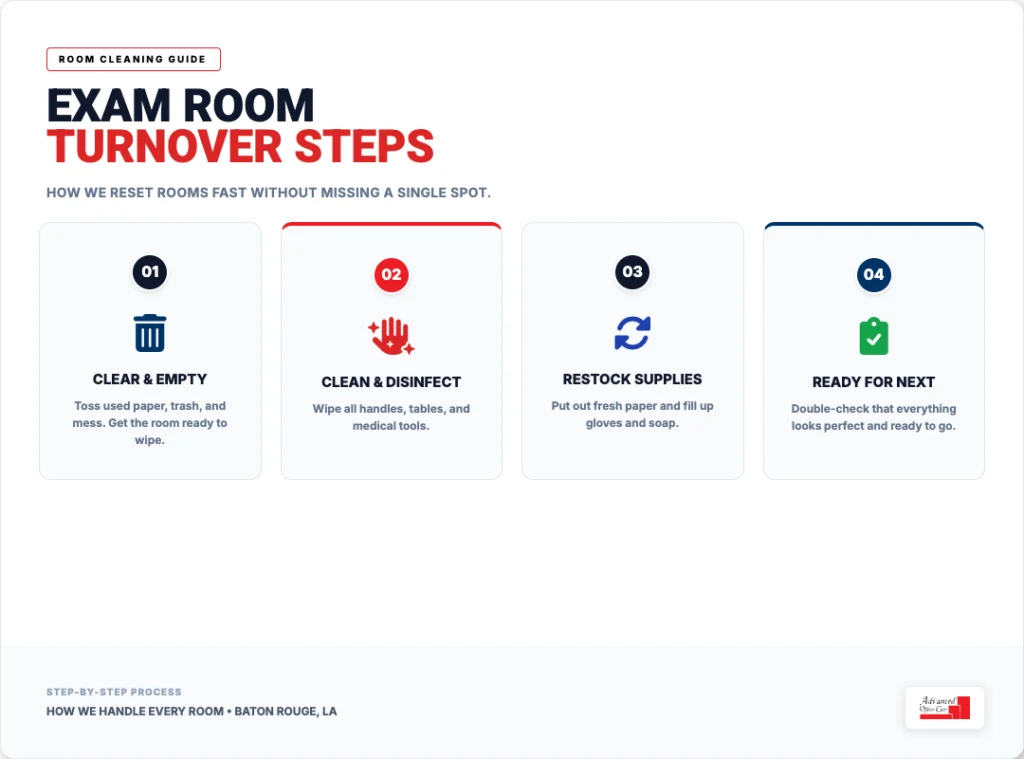
Once the room turnover process is defined at a high level, the next step is getting specific about the order of work.
Step 1: Clear the Room Before You Start Wiping
Turnover fails when teams try to disinfect around clutter. Start by removing anything that should no longer be in the room.
That usually includes used exam table paper, waste, disposable barriers, visibly soiled materials, and anything left out from the previous visit. If there is visible soil or body fluid contamination, address it first using the appropriate protocols and products for the situation.
This first step matters because disinfectants do not perform well on dirty surfaces. A rushed wipe over debris is not a reset. It is just a faster way to miss the real issue.
Once the room is cleared, you can move to the surfaces that need consistent attention every time.
Step 2: Hit High-Touch Surfaces in a Consistent Order
High-touch surfaces are where rushed turnover shows up first. They also happen to be the surfaces patients and staff notice most.
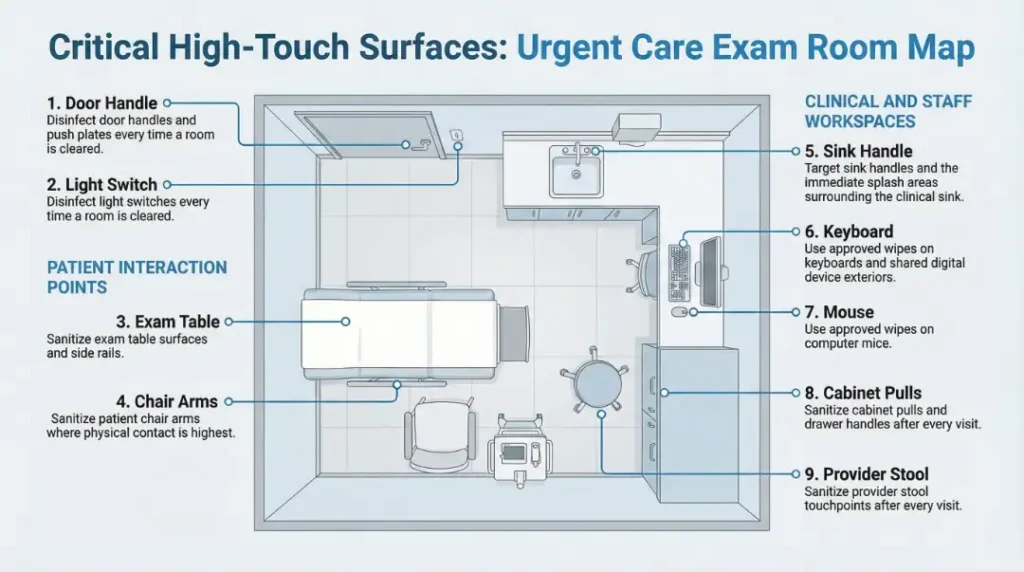
In an urgent care exam room, that list often includes:
- Exam table surfaces and side rails
- Patient chair arms and provider stool touchpoints
- Countertops and writing surfaces
- Door handles and push plates
- Light switches
- Sink handles and nearby splash areas
- Keyboard, mouse, phone, and approved device exteriors
- Vitals equipment exteriors, and mobile cart handles
- Cabinet pulls and drawer handles
The key is not only what gets cleaned. It is the order. Work in a consistent pattern so that surfaces are not missed when the pace picks up.
Once the high-touch surfaces are covered, the workflow has to address the rest of the patient zone and the room setup itself.
Step 3: Reset the Patient Zone for the Next Visit
A room is not ready just because the obvious surfaces were wiped down. It also has to feel ready for the next provider and the next patient.
That means replacing exam table paper, straightening the room, confirming needed supplies are in place, and checking that patient-facing areas do not look half-finished. In a high-volume urgent care setting, the “visual ready” standard matters because it affects both confidence and speed.
Common reset items include:
- Fresh exam table barrier or paper
- Gloves in the right sizes
- Soap, sanitizer, and paper products as needed
- Basic room consumables used repeatedly throughout the shift
- Chairs, stools, and movable items placed back in a usable position
When this part of the workflow gets skipped, staff lose time fixing the room while the next patient is already waiting. That turns a small cleaning miss into an operations problem.
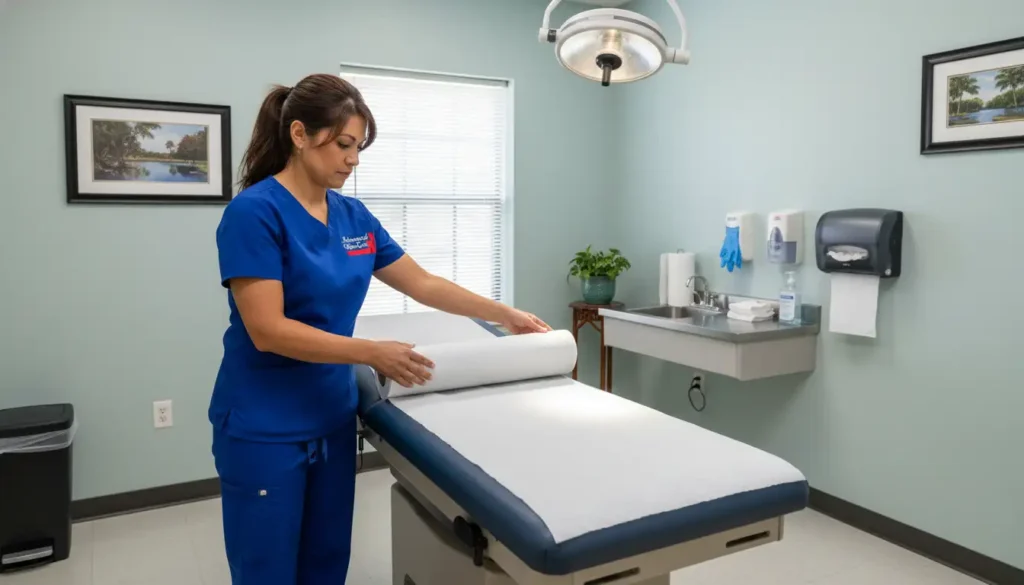
Between-patient turnover is only one side of the process, though. A good clinic also separates what must happen during the day from what belongs in the close-down routine.
Step 4: Separate Between-Patient Turnover from End-of-Day Cleaning
One of the most common urgent care mistakes is trying to make one checklist do everything. Between-patient turnover and end-of-day cleaning are not the same job.
| Task Type | Between Patients | End of Day |
| Exam table and patient-contact surfaces | Yes | Yes |
| High-touch points like handles and switches | Yes | Yes |
| Restocking room basics | Yes | Yes |
| Full floor detail and edges | No | Yes |
| Low-touch surfaces and buildup areas | No | Yes |
| Deeper room reset and supply stabilization for the next day | No | Yes |
Splitting these tasks keeps the day moving while still protecting the next shift from starting behind.
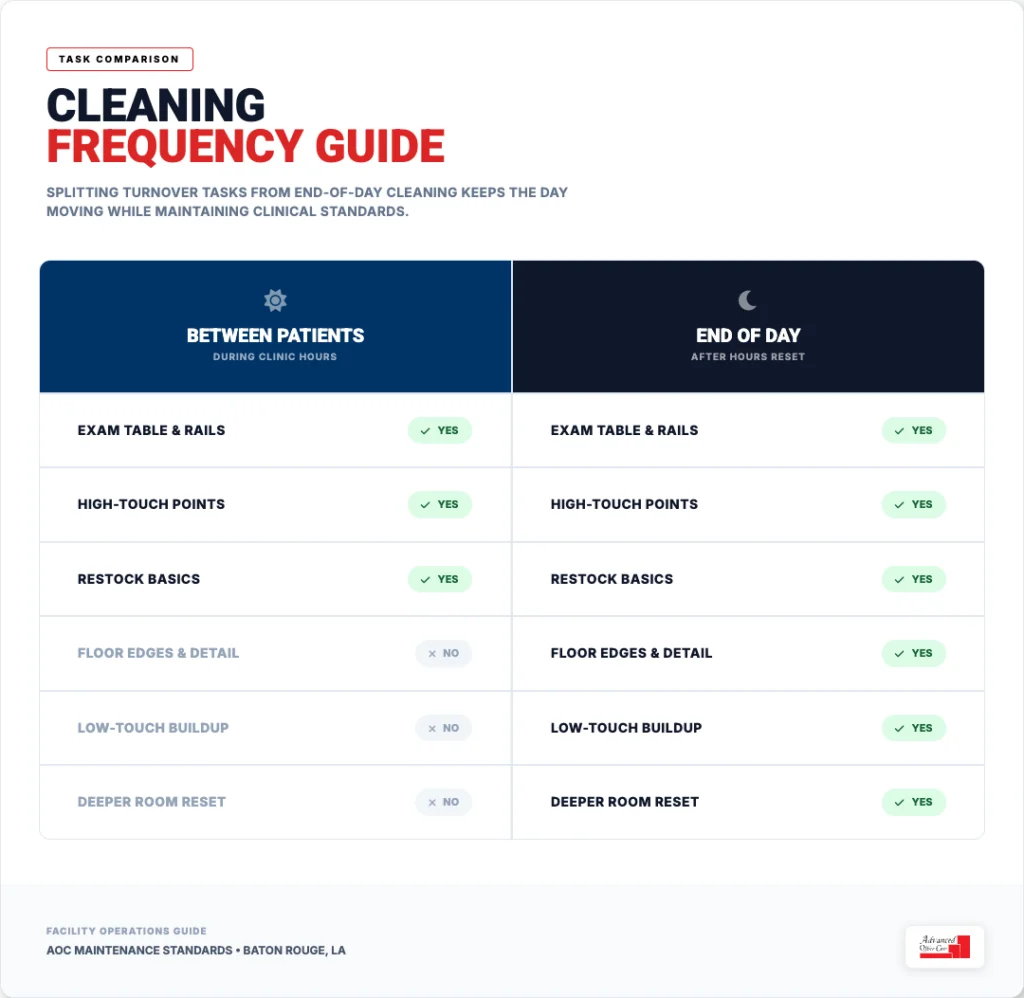
Once the room tasks are properly separated, the next challenge is to make the process repeatable across shifts and staff members.
Step 5: Use Checklists and Logs to Keep Standards Consistent
Consistency falls apart when turnover lives in memory. One person wipes the keyboard every time. Another never does. One shift restocks properly. The next assumes someone else handled it.
A strong urgent care turnover checklist should define:
- Who handles room turnover
- What gets cleaned for every patient
- Which products or methods apply to that room type
- What gets restocked before release
- How is the room marked as ready
- How issues or misses get reported
If your team is already feeling the strain from room delays, this is also where a specialist cleaning partner can stabilize the process. See the 5 signs your urgent care facility needs a specialized cleaning service for the warning signs that usually show up first.
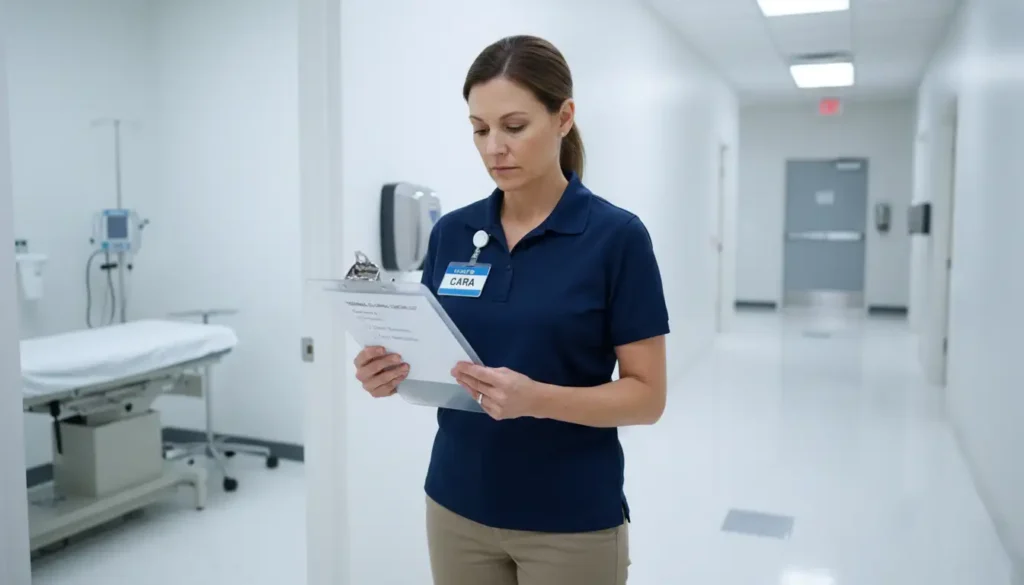
A checklist is only useful if the clinic also monitors the common failure points that keep recurring in fast-paced environments.
Common Reasons Exam Room Turnover Breaks Down
Most urgent care turnover problems come from a few repeat issues, not from one big failure.
| Common Mistake | The Impact on Your Clinic |
| No written room turnover standard | Each staff member cleans differently, and misses vary by shift |
| High-touch surfaces not clearly defined | Frequently handled areas get skipped during busy periods |
| No separation between turnover and closing tasks | Rooms stay half-reset or close-down work never gets done well |
| Poor restocking discipline | Providers lose time fixing rooms before seeing the next patient |
| No inspection or spot-check process | Quality drifts, and problems only surface after complaints |
Many clinics also expect clinical staff to absorb cleaning gaps during rush periods. That might work for a day or two. It is not a stable model for a high-volume urgent care.
Once you see where turnover is actually breaking, it becomes easier to decide what to fix first.
What to Fix First If Your Rooms Keep Falling Behind
If exam room turnover is inconsistent, start with a short list of practical fixes.
First: define what “room ready” means in writing. Second: create a room-specific high-touch list. Third: split between-patient tasks from end-of-day tasks. Fourth: assign responsibility clearly by shift or role. Fifth: add a simple spot-check system so quality does not depend on guesswork.
Those five changes usually do more for clinic flow than broad reminders ever will. They make the process visible, easier to train on, and easier to correct when standards slip.
Once the basics are in place, your clinic can move from reactive cleanup to a cleaner, steadier workflow that supports patient care.
Final Takeaway
Exam room cleaning workflow in urgent care works best when it is simple, repeatable, and aligned with how the clinic actually operates. A room should be cleared, cleaned, disinfected, restocked, and released the same way every time. That protects patient confidence, supports infection control, and helps your staff move through the day with less friction.
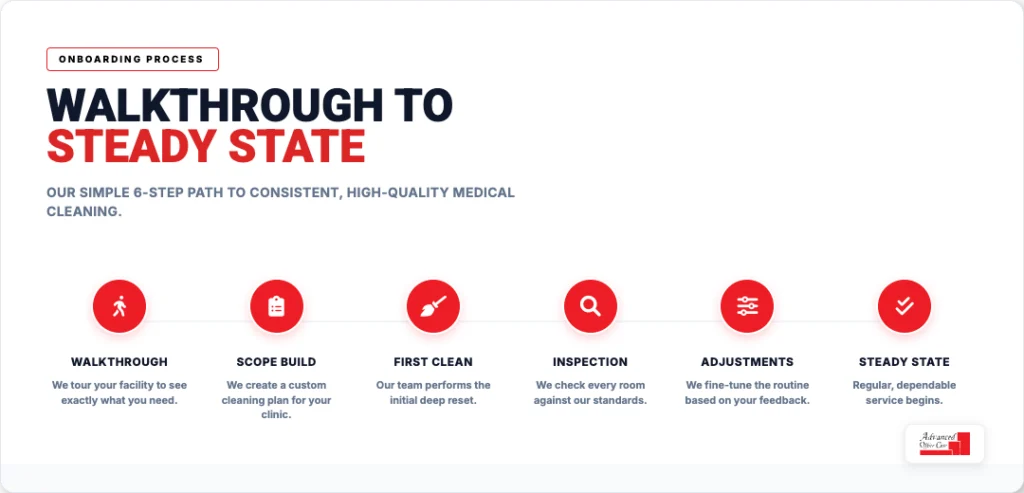
Advanced Office Care builds urgent care cleaning plans for Baton Rouge clinics that need fast room turnover, high-touch disinfection, and dependable quality control. Request a quote or learn more about Advanced Office Care today.
Common Questions About Exam Room Cleaning Workflow in Urgent Care
High-volume clinics usually have the same few questions when they start tightening room turnover. These answers give a practical starting point for urgent care administrators and office managers who need a process that works during real patient volume, not just on paper.
What should be cleaned between patients in an urgent care exam room?
Between-patient turnover should cover the exam table, patient-contact surfaces, high-touch room surfaces, the exteriors of approved equipment used during the visit, visible debris, and basic supply reset items. The room should also be visually ready before the staff send the next patient in.
How often should urgent care exam rooms be cleaned?
The exact routine depends on room use, patient volume, and the type of care being delivered. In practice, urgent care clinics should define what is handled between patients, what is cleaned routinely throughout the day, and what belongs in end-of-day or deeper-cleaning protocols.
What is the difference between room turnover and terminal cleaning?
Room turnover is the between-patient reset that keeps clinic flow moving. Terminal cleaning is the deeper close-down cleaning done after the day ends or after patient-use periods, depending on the room type and clinic protocol.
Why do urgent care rooms fall behind, even when staff are cleaning them?
Rooms often fall behind because the process is not standardized. Staff may clean different surfaces, skip restocking, or handle tasks in an inconsistent order. Without a checklist and a clear release standard, turnover quality varies by person and by shift.
Do checklists actually help in a busy clinic?
Yes. In a busy urgent care, a brief room-specific checklist reduces missed steps, supports training, and provides supervisors with a clear way to verify standards. It also makes it easier to troubleshoot why one room or one shift keeps having problems.
When should a clinic hire a specialist cleaning partner?
If your providers are losing time to room resets, high-touch surfaces are being missed, or quality changes from shift to shift, a specialist cleaning partner can help build a process that fits the urgent care pace and room turnover demands. If your clinic needs a more consistent process across rooms and shifts, a medical office cleaning partner can help build a workflow that fits your facility.
Want a medical cleaning plan built around room turnover, high-touch disinfection, and steady quality control? Fill out the form below to schedule a walkthrough.
About the Author: This guide was produced by the Advanced Office Care content and operations team. Based in Baton Rouge, Louisiana, Advanced Office Care provides commercial and medical facility cleaning and floor maintenance for facilities that need reliable service, clear communication, and inspection-level detail.