
Cleanliness in an urgent care facility directly impacts patient trust, exam room turnover, infection control, and compliance. When standards slip, operational issues become evident. Recognizing these signs early is crucial to maintaining safety and efficiency, prompting timely intervention with a specialized healthcare cleaning partner.
Quick Summary
Before we explore each sign in detail, here is a brief overview to help you quickly identify potential problem areas within your facility.
- Slow exam room turnover often means staff are cleaning instead of treating patients.
- High-touch surfaces deteriorate when disinfection cycles are missed.
- Inconsistent cleanliness in the waiting room affects patient confidence.
- Restrooms declining before lunch indicate inadequate cleaning capacity.
- Staff complaints point to burnout and compliance gaps.
With these key issues in mind, let us look more closely at what each one means for your urgent care center.
Sign 1: Exam Room Turnover Is Slowing Down
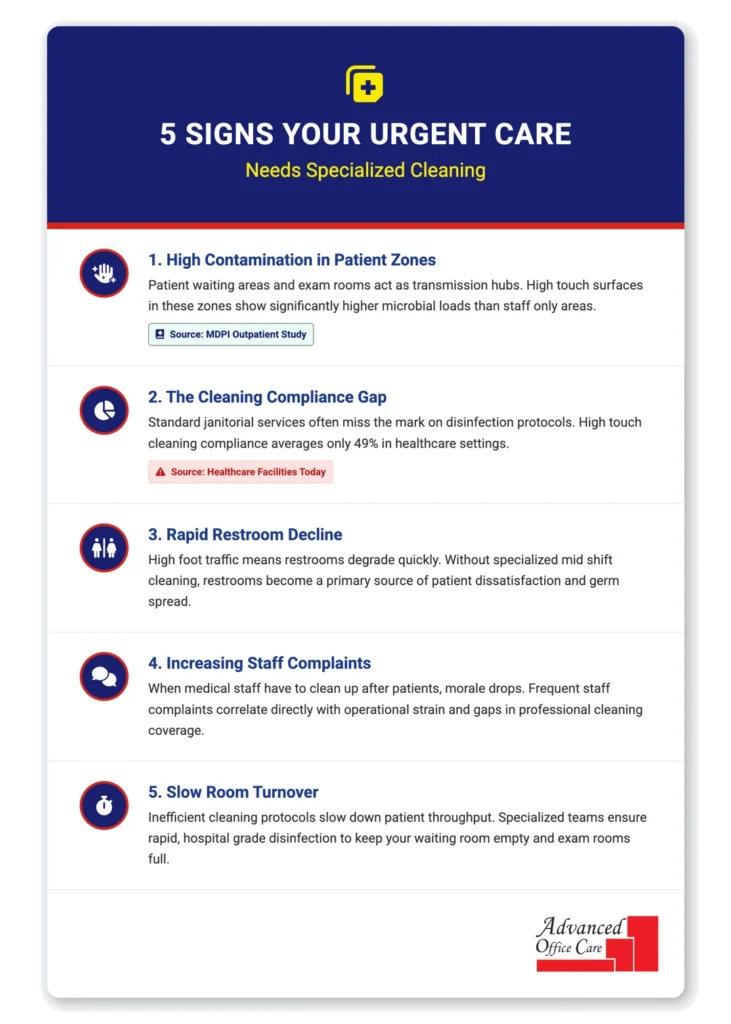
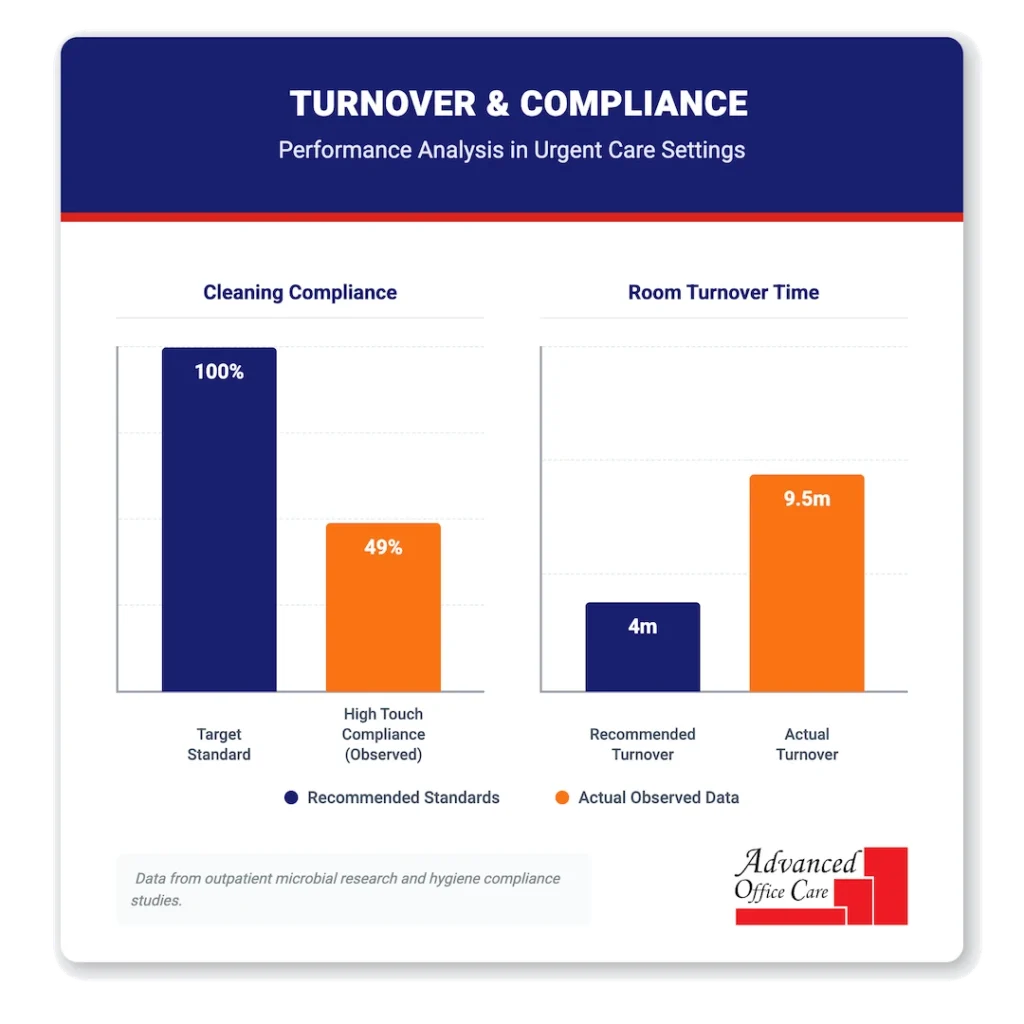
Exam room turnover is one of the most important operational metrics in any urgent care environment. When rooms are not reset quickly or correctly, your entire patient flow can slow down. We have seen nurses and providers performing wipe downs themselves simply because no cleaning support is available during peak hours.
Slow turnover often shows up as unprepared rooms, visible debris, or extended wait times. These are signs that your cleaning model is not designed for fast-paced clinical care.
Transitioning from exam rooms, let us consider the surfaces that receive the most contact throughout the day and how they can impact safety and perception.
Sign 2: High Touch Areas Are Showing Wear or Grime
High-touch surfaces need consistent attention because they accumulate pathogens more quickly than any other part of the facility. When armrests, door handles, keyboards, counters, and check-in screens begin to show smudges or residue by midday, it can undermine patient trust and confidence in your facility’s safety. This often points to missed disinfection cycles.
We have walked through clinics where armrests looked fine at first glance, but a closer look revealed buildup that should not have been there. Findings like these are supported by research from an outpatient clinic study showing that patient zone surfaces carry significantly higher microbial loads than staff-only surfaces.
The importance of proper disinfection becomes even clearer when you consider a hygiene compliance study that found high-touch cleaning rates in healthcare settings can be as low as 20 percent and average only 49 percent. That level of inconsistency creates obvious risks for urgent care centers with constant patient turnover.
Patients notice these surfaces immediately. If high-touch areas look dirty, patients often assume the rest of the facility is not maintained correctly. This affects trust and overall satisfaction, even if they never mention it to staff.
After high-touch areas, another part of the facility that quietly shapes patient perception is the waiting room.
Sign 3: The Waiting Room Does Not Stay Clean
The waiting room is often the first space patients see, and it sets the tone for the rest of their visit. If it looks clean in the morning but worn down by noon, your current cleaning routine is not keeping up with traffic.
Common issues include dusty check-in counters, fingerprints on glass, debris on the floor, or full trash bins. Patients connect these details to overall care quality, even if they do not say it out loud.
Next, let us take a closer look at another highly visible area that can reveal deeper cleaning capacity problems: the restroom.
Sign 4: Restrooms Decline Before Midday
Restrooms often reveal how well a facility manages cleaning. If odors, residue, or supply shortages begin before lunchtime, the issue is not just cleaning quality. It is often a matter of insufficient cleaning support during operating hours.
Patients often visit the restroom before being seen by a provider. If the restroom is not clean, many quietly lose confidence in the rest of the facility or may choose to seek care elsewhere.
When restroom issues become common, staff often begin speaking up, which leads us to the next sign.
Sign 5: Staff Are Complaining About Cleanliness
When staff express concerns about cleanliness, it often reflects their efforts to fill gaps, which can lead to frustration and a sense of being undervalued. Recognizing these concerns can help you see the need for better support, boosting morale and confidence in your cleaning approach.
These concerns often indicate that your facility has outgrown its current cleaning arrangement and may benefit from a healthcare-trained provider.
At this point, it helps to understand why general commercial cleaning companies struggle to meet urgent care requirements.
The Problem With General Commercial Cleaning Companies
Most commercial cleaning companies are not trained to work in healthcare environments. Without proper training, they may use the wrong products, skip essential disinfection procedures, or overlook key compliance responsibilities. This can lead to missed protocols and inconsistent results.
Specialized medical cleaning requires structured procedures, healthcare-approved products, and detailed documentation, which can give your team a clearer sense of control and confidence in maintaining compliance and safety standards.
This increase in specialized cleaning is reflected in market research on healthcare environmental services, which projects growth from $6.75 billion in 2024 to $9.53 billion by 2029. The trend shows how many facilities are moving toward healthcare-trained cleaning partners rather than general commercial providers.
Understanding these limitations sets the stage for what a specialized urgent care cleaning program actually includes.
What Specialized Urgent Care Cleaning Includes
Specialized urgent care cleaning ensures clinical-level sanitation through structured routines, EPA-registered disinfectants, and reliable reporting. This approach aligns with CDC cleaning guidance, which recommends a risk-based strategy that prioritizes high-touch surfaces and areas with the highest likelihood of contamination. These services are designed to support both patient safety and operational efficiency.
| Service | Why It Matters |
| Structured exam room turnover | Reduces delays and supports consistent patient flow |
| EPA-registered disinfectants | Provides proper pathogen control for clinical settings |
| High-touch disinfection cycles | Prevents cross-contamination risks |
| Mid shift restroom refreshes | Maintains patient confidence and safety |
| Deep cleaning rotations | Improves long-term cleanliness and surface protection |
| Documentation and reporting | Supports compliance and leadership oversight |
The impact of structured, high-touch cleaning is also supported by a hospital-based disinfection study that reduced the presence of gram-negative bacteria from 45.6 percent to 16.3 percent through enhanced cleaning practices. While urgent care settings differ from inpatient environments, the findings highlight how improved disinfection directly supports better patient safety.
Now that we have covered the full scope of specialized cleaning, let us focus on how this applies specifically to Baton Rouge facilities.
Spotlight: Urgent Care Cleaning in Baton Rouge
Urgent care clinics in Baton Rouge often face rapid patient turnover and seasonal surges. Many rely on local providers who understand the expectations of medical environments and the unique challenges created by Louisiana weather and humidity.

Our team at Advanced Office Care supports urgent care centers by providing consistent, high-touch disinfection, structured exam room resets, and midday refresh cycles that help clinics stay efficient during their busiest hours.
With local expertise and medical-grade training, we help facilities stay clean, compliant, and ready for patient care.
If you are looking to improve facility standards immediately, the next section provides practical steps.
Practical Tips to Improve Cleanliness Immediately
You can improve facility cleanliness quickly by evaluating a few key areas. These steps are easy to implement and can offer helpful insights before partnering with a specialized provider.
- Track exam room turnover times during peak hours.
- Inspect high-touch surfaces hourly for signs of wear or grime.
- Check restroom conditions at midday to identify decline patterns.
- Ask staff privately what cleaning tasks they feel responsible for.
- Review all disinfectant labels to confirm EPA registration.
Once these areas are reviewed, you can better determine whether your facility would benefit from a healthcare-trained cleaning team.
Helpful Resources and Next Steps
To learn more about specialized cleaning services for urgent care centers, visit our dedicated service page or request a walkthrough.
Now that we have covered the major signs and solutions, here are some common questions we receive from urgent care administrators.
Frequently Asked Questions
Here are some of the questions we get asked all the time about urgent care facility cleaning:
How often should an urgent care facility be professionally cleaned?
An urgent care center should be professionally cleaned every day and undergo multiple high-touch disinfection cycles throughout the day. Exam rooms must be cleaned after every patient to maintain clinical safety standards.
Do urgent care clinics require specialized disinfectants?
Yes. Urgent care facilities must use EPA-registered medical disinfectants with pathogen-specific kill claims. General-purpose cleaners are not suitable for clinical surfaces.
Why do exam rooms get dirty so quickly?
Exam rooms experience rapid contamination due to frequent touch points, equipment use, and high patient volume. Without structured patient cleaning, they degrade quickly and become a risk.
If any of these issues sound familiar, it may be the right time to evaluate your current cleaning arrangement and consider a healthcare-trained alternative.


