Commercial Floor Maintenance in Baton Rouge, Matched to Every Surface
The single biggest mistake in commercial floor care is treating every surface the same way. Carpet, VCT, tile, hardwood, and polished concrete each need their own methods and their own schedule. A floor program that matches the service to the material protects the floor, keeps it safe underfoot, and stretches years of extra life out of what you already own.
TLDR:
- Every floor type needs a different maintenance rhythm, and the wrong method can ruin a surface.
- Entryway matting is the cheapest floor protection you have, stopping most tracked-in grit before it reaches the floor.
- Carpet needs frequent vacuuming by traffic level plus deep extraction every 12 to 18 months.
- VCT and vinyl run on a strip-and-recoat cycle, with burnishing to hold the shine in between.
- Hardwood and laminate hate standing water, so wet mops and steam mops are out.
- Terrazzo and polished concrete are the lowest-maintenance floors and can last the life of the building.
- The real win is a written program that puts each surface on the right schedule instead of reacting after damage shows.
Baton Rouge is hard on floors. Humidity, frequent rain, and the grit that comes with both get tracked across every lobby, office, clinic, and classroom in the parish. For a facility manager, floors are one of the largest, most visible, and most expensive surfaces in the building, and they wear out fastest when maintenance is one-size-fits-all. This guide walks through each common commercial floor type and how Advanced Office Care keeps it looking right and lasting longer.
Why Floor Care Belongs on Every Facility Manager’s Radar
Floors are not just an appearance issue. They drive cost, safety, and the first impression every visitor forms of your building.
Cleaning already represents a large share of your operating budget. The trade association ISSA notes that cleaning runs 20 to 35 percent of a building’s total maintenance and operations budget, and floor care is one of the biggest pieces of that, mostly in labor. Spend that labor on the wrong schedule and you pay twice, once for the work and again for the early replacement.
Safety is the other half. Falls, slips, and trips remain a leading cause of workplace injury, and the U.S. Bureau of Labor Statistics recorded 844 fatal workplace falls, slips, and trips in 2024. The National Floor Safety Institute ties floors directly to the broader problem, pointing to roughly 8 million fall-related emergency room visits a year. A maintained floor with the right finish is a safer floor.
Start at the Door: Entryway Matting
The cheapest floor protection in the building is the mat at the front door, and it is the one most often overlooked.
Occupants track in the large majority of the dirt that ends up on your floors, and a proper walk-off matting system stops most of it before it spreads. Industry guidance from Hillyard, citing Carpet and Rug Institute recommendations, is 12 to 15 feet of matting for a typical office entrance and 20 to 25 feet for high-traffic sites like clinics and grocery stores, where a 20-foot run can capture around 90 percent of tracked-in soil.
Every particle a mat stops is a particle that never scratches your VCT, embeds in your carpet, or gets ground into your tile. Matting is not glamorous, but it is the highest-return line item in floor care.
Carpet: Vacuum Often, Extract on Schedule
Carpet fails from the grit you cannot see, not the stains you can. Sharp soil works down into the pile and cuts the fibers with every footstep, which is why frequency matters more than any single deep clean.
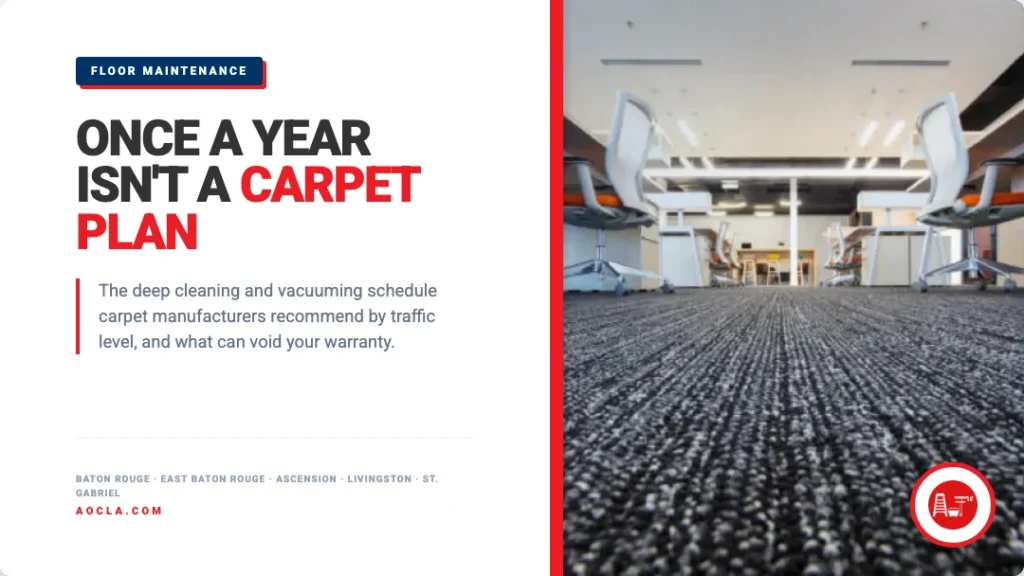
The Carpet and Rug Institute recommends vacuuming daily in high-traffic areas, twice weekly in medium-traffic areas, and weekly in light-traffic areas, then professionally deep cleaning with hot-water extraction every 12 to 18 months. The goal is to lift soil before it embeds and abrades the fiber, not to wait until the carpet looks dirty.
For a Baton Rouge office, medical suite, or school, that rhythm is the difference between carpet that lasts a decade and carpet that looks tired in three years. Our commercial carpet cleaning and maintenance in Baton Rouge is built around that schedule.

VCT and Vinyl Tile: The Strip-and-Recoat Rhythm
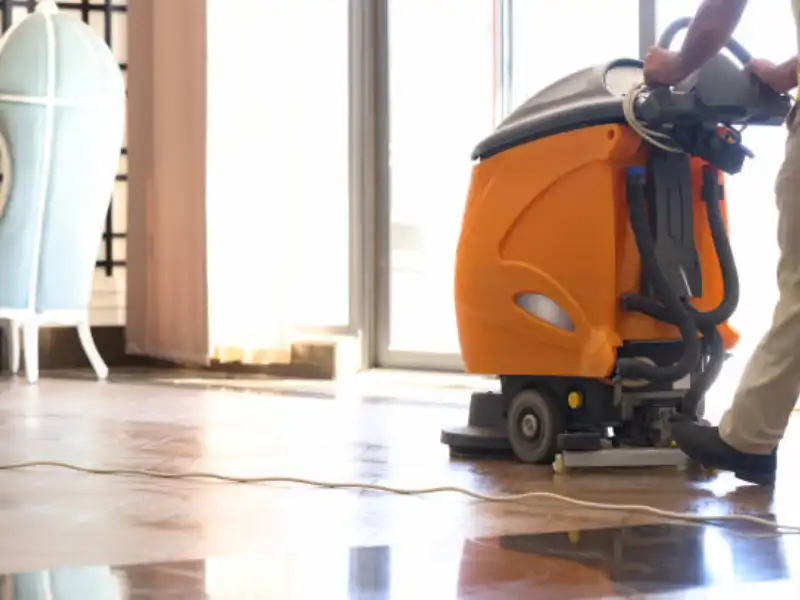
Vinyl composition tile is the workhorse of commercial floors, and it lives or dies by its finish. The tile itself is durable, but the shine and protection come from the floor finish on top, which wears down under traffic.
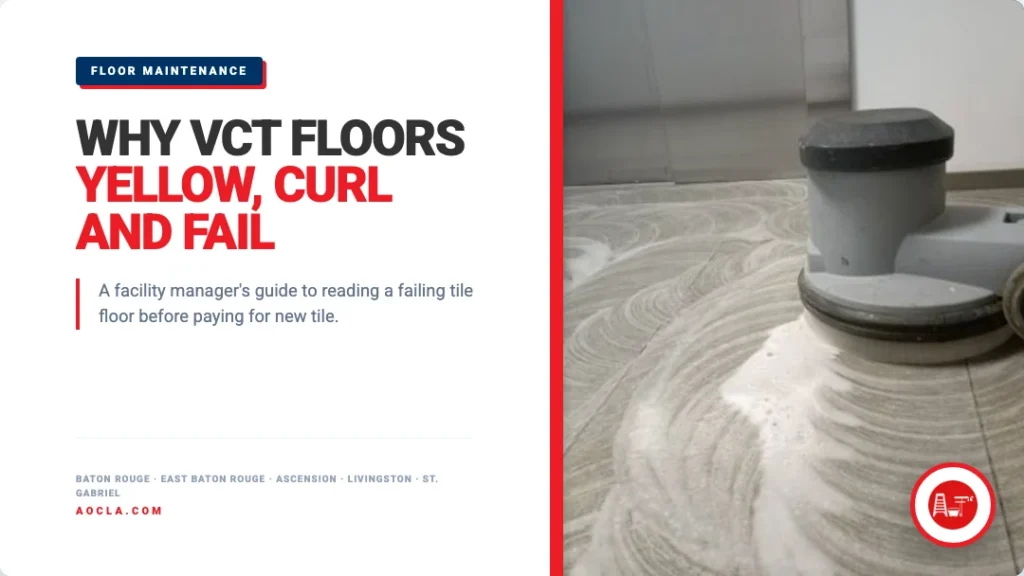
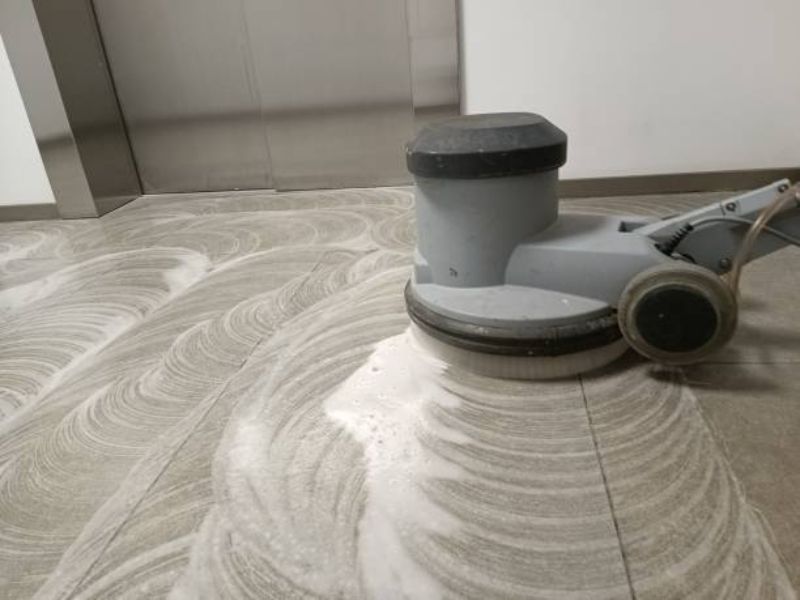
A VCT program runs on a cycle: routine dust and damp mopping, periodic burnishing or spray-buffing to bring the gloss back, and a full strip-and-recoat when the finish is spent. Armstrong’s maintenance instructions call for a minimum of three coats of finish after stripping, with more on refinishing. In a high-traffic commercial setting, the strip-and-recoat typically comes around every 6 to 12 months, sooner in a busy entrance, later in a back office.
Skip the burnishing and the floor goes dull fast. Skip the recoat too long and traffic wears through the finish into the tile, which is far more expensive to fix. Our vinyl and VCT floor maintenance keeps that cycle on schedule.
Ceramic and Porcelain Tile: Do Not Forget the Grout
Tile is one of the most durable commercial surfaces, but the grout between the tiles is the weak point, and it is where most tile floors start to look dirty.
The tile faces clean easily with routine sweeping and mopping. Cement-based grout, though, is porous and holds soil and moisture, so it needs periodic deep scrubbing and resealing, generally every one to three years depending on traffic. Epoxy grout does not need sealing, which is worth knowing before you schedule the work. The TCNA Handbook is the industry reference for tile and grout care.
In a humid climate like Baton Rouge, unsealed grout in a restroom or break room can discolor and harbor grime quickly. Our ceramic and porcelain tile cleaning in Baton Rouge covers both the tile and the grout.
Hardwood and Laminate: Keep Water Away
Wood and laminate floors bring warmth to a lobby or executive suite, and they are the least forgiving of the wrong cleaning method. The one rule that matters most is to keep standing water off them.
The National Wood Flooring Association is direct about it: do not use wet mops or steam mops, which damage the finish and the wood over time, and clean spills immediately. Use a cleaner made specifically for the floor’s finish, not a general-purpose product. When the finish dulls, a screen-and-recoat, generally every few years, refreshes the surface without a full sanding.
Laminate follows the same water-averse rules. Get either one wet on a regular basis and you get warping and lifting that no cleaning can fix. Our hardwood floor care and laminate floor maintenance use methods matched to each finish.
Terrazzo and Polished Concrete: Low Maintenance, Long Life
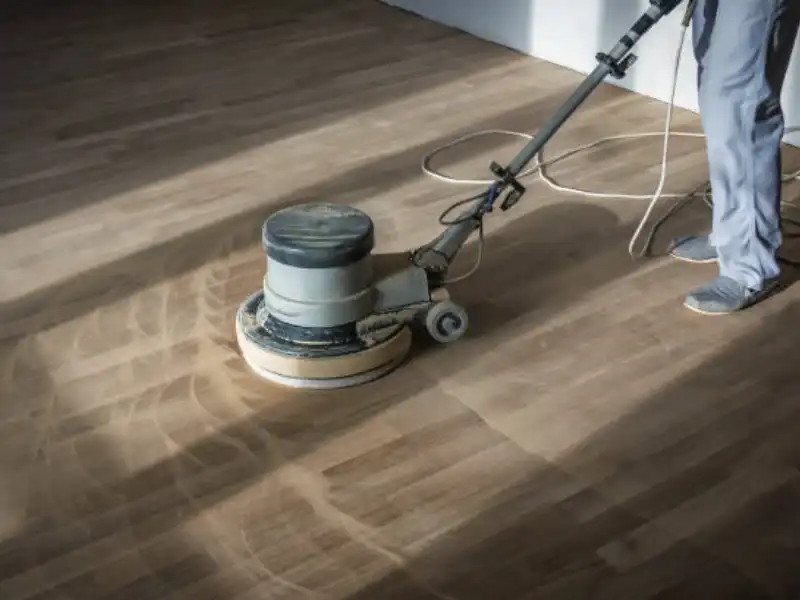
If you want the lowest lifetime cost per square foot, these two are hard to beat. Both are ground and polished solid surfaces with no finish coat to strip and no fibers to wear out.
Terrazzo can last for generations, and polished concrete can last the life of the building. Maintenance is mostly routine dust mopping and damp mopping, with periodic burnishing to refresh the sheen and a re-polish or re-burnish every few years in heavy traffic. There is no stripping, no waxing, and no recoating, which is why so many Baton Rouge lobbies and corridors are moving to polished surfaces.
The catch is that the polish still needs upkeep to stay bright, and neglected polished concrete goes flat and gray. Our commercial floor maintenance in Baton Rouge keeps polished surfaces on a light but regular rhythm.
Gym Floors: A Category of Their Own
Wood gym floors are a specialty, with their own finishes, line-paint, and recoating cycle that differ from any office floor. They need routine dust mopping, careful cleaning, and a recoat on a set schedule to protect the wood and the graphics. Our school and gym floor maintenance handles that specialized work.
Building a Baton Rouge Floor Maintenance Program
The theme across every surface is the same: the floors that last are the ones on a schedule, not the ones that get attention after the damage shows.
A real program starts with an inventory of what floors you actually have, assigns the right routine, periodic, and restorative tasks to each, and puts them on a calendar tied to traffic and use. That is what turns floor care from a reactive expense into a predictable line item that protects a major asset. It also keeps labor, the biggest cost in floor care, pointed at the right work at the right time.
Advanced Office Care builds and runs that program for Baton Rouge facilities. Comparing options for your building? Request a floor maintenance quote, or call (225) 751-7388.
Common Questions About Commercial Floor Maintenance
These are the questions Baton Rouge facility managers ask us most before setting up a floor program.
How often should commercial carpet be professionally cleaned?
The Carpet and Rug Institute recommends professional deep extraction every 12 to 18 months, on top of regular vacuuming that runs daily in high-traffic areas and less often in lighter areas. High-traffic entrances and medical suites usually land at the shorter end of that range.
How often does VCT need to be stripped and waxed?
In most commercial settings, a full strip-and-recoat lands somewhere around every 6 to 12 months, with burnishing in between to hold the shine. Busy entrances need it more often, and back offices less. Good matting and regular burnishing stretch the interval.
Can I use the same cleaning method on all my floors?
No, and that is the most common way floors get ruined. Wet mopping is fine for VCT and tile but damages hardwood and laminate. Each surface needs a method matched to the material, which is the whole point of a service-by-surface program.
Do polished concrete and terrazzo really need maintenance?
Yes, just less of it. They have no finish to strip, but the polish dulls without periodic burnishing and light upkeep. Neglected, they go flat and gray, so a regular light rhythm keeps them bright for decades.
What is the highest-value thing I can do for my floors?
Entryway matting. Stopping tracked-in grit at the door protects every floor behind it, reduces wear, and cuts the labor needed to keep the rest of the building clean. It is the cheapest and most effective step in any floor program.
Ready to put your floors on a real schedule?
Advanced Office Care builds surface-by-surface floor maintenance programs for Baton Rouge offices, clinics, schools, and facilities, so every floor gets the right care and lasts longer.